PTFE
Plastic Engineering Solution is a reliable Polytetrafluoroethylene (PTFE) plastic supplier in India, supplying and machining PTFE rods, sheets, plates, and custom PTFE components for demanding industrial applications that require chemical resistance, low friction, thermal stability, and electrical insulation.
Polytetrafluoroethylene (PTFE), commonly known as TeflonĀ®, is widely used for its exceptional chemical resistance, extremely low coefficient of friction, non-stick surface properties, high temperature resistance, and excellent electrical insulation. It is suitable for seals, gaskets, liners, sliding components, insulation parts, and chemically exposed industrial components.
Key Properties of PTFE
These properties make PTFE suitable for critical applications involving aggressive chemicals, sliding contact, and thermal stress.
PTFE Industrial Applications
PTFE components are widely used across industries such as:
Its inert nature makes PTFE ideal for applications requiring chemical compatibility and contamination-free performance.
PTFE Stock Shapes
Plastic Engineering Solution supplies PTFE in multiple stock shapes, including:
Rods
Sheets
Bush
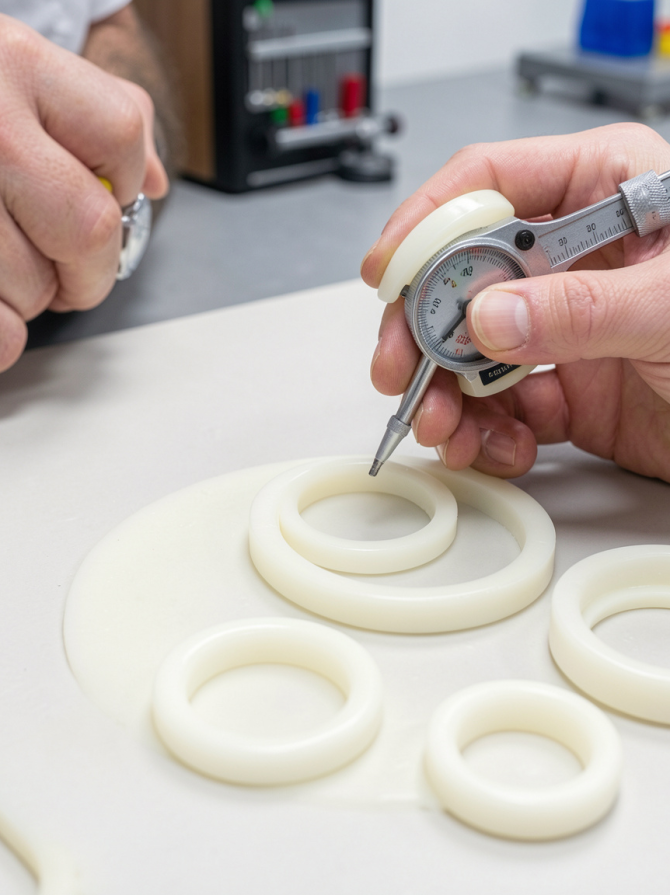
OD - 444mm x ID - 317mm x LT - 153mm)
All products are manufactured and machined under controlled processes to ensure material integrity and performance consistency.
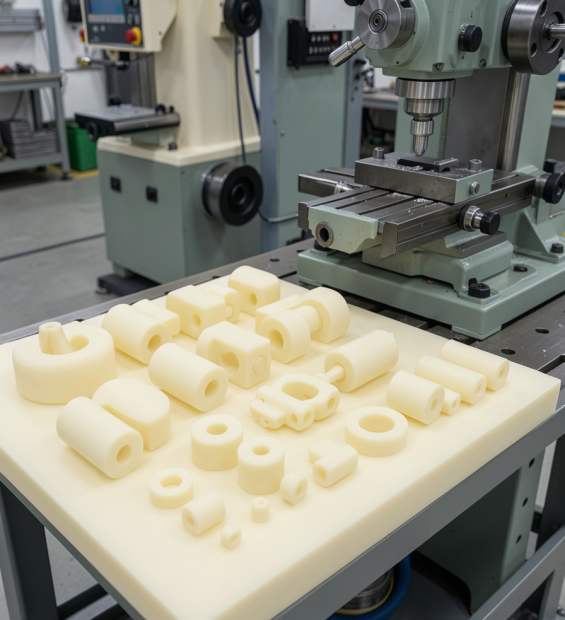
PTFE Machining
PTFE requires specialized machining techniques due to its softness and creep behavior.
Our PTFE machining capability includes:
- CNC turning and milling
- Precision profiling and contouring
- Prototype and repeat production
- Tight tolerance machining based on application needs
We optimize machining parameters to achieve clean finishes, accurate dimensions, and reliable component performance.
PTFE Grades Supported
We support a range of PTFE material grades, including:
Our team assists with grade selection based on wear resistance, load conditions, and chemical exposure.
PTFE Machining Tolerances
PTFE machining tolerances depend on:
- Component geometry
- Wall thickness
- Operating conditions
- Application requirements
Typical achievable tolerances are maintained as per design feasibility, with tighter tolerances possible for precision applications after engineering evaluation.
(Detailed tolerance information can be provided during the RFQ stage.)