

PAI
Key Properties of PAI
These properties make Polyamide-Imide (PAI) a strong choice for components that must maintain strength, accuracy, and wear performance under heat, pressure, and continuous mechanical stress.
PAI Industrial Applications
Polyamide-Imide (PAI) components are used in high-performance applications where parts must retain strength, accuracy, and wear resistance under severe operating conditions.
Polyamide-Imide (PAI) is suited for critical applications where heat, pressure, friction, dimensional control, and long service life are all important performance requirements.
PAI Stock Shapes
Plastic Engineering Solution supplies Polyamide-Imide (PAI) in stock shapes and machined forms for severe-service applications where strength, stability, and wear performance are critical.

PAI Plate

PAI Rods

PAI Tabular Bar
OD - 101mm x ID - 57mm x LT - 610mm)
PAI products are typically selected for high-load, high-temperature, low-wear, and precision applications where conventional engineering plastics may not provide the required long-term reliability.
PAI Grades Supported
We support a range of Polyamide-Imide (PAI) material grades selected for high-load, high-temperature, and wear-critical applications.

Our team helps select the right PAI grade based on load, temperature, sliding speed, friction conditions, dimensional stability needs, and expected service life.
PAI Machining
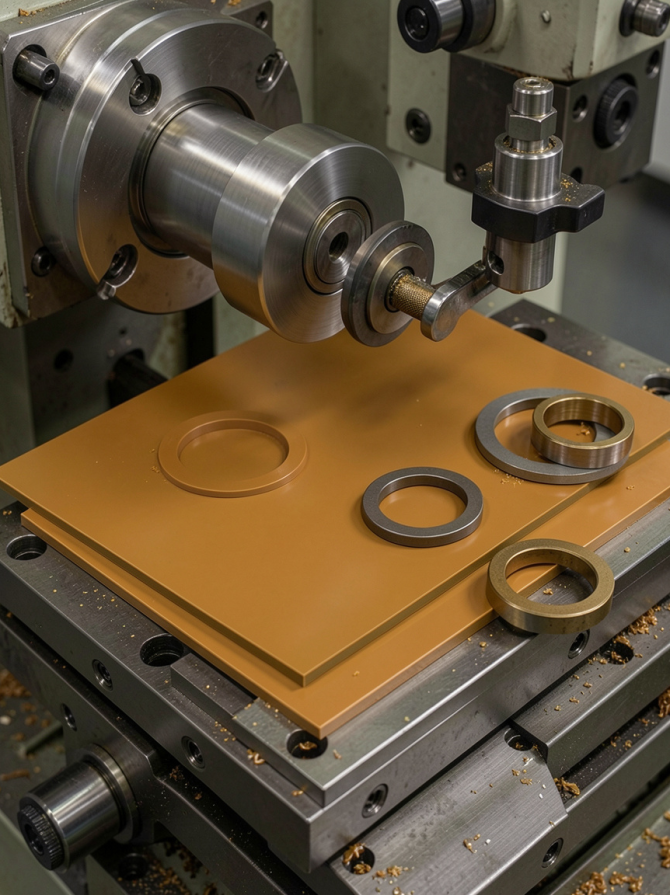
Polyamide-Imide (PAI) is a high-performance material that needs careful machining control because of its stiffness, strength, and use in close-tolerance applications. When machined correctly, PAI delivers excellent dimensional accuracy and long-term stability in severe-service components.
Our PAI machining capability includes:
- CNC turning and milling
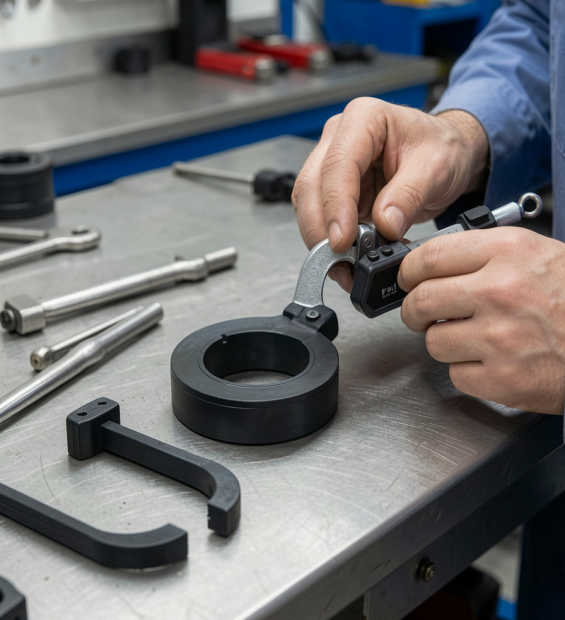
- Close-tolerance machining for precision parts
- Bearing, bushing, seal, and washer manufacturing
- Profiling and contouring for complex components
- Prototype and repeat production
- Machining based on load, heat, and wear requirements
For PAI parts, machining is planned around the final application — especially where friction, heat, pressure, and dimensional control directly affect component performance. This helps achieve clean finishes, accurate fits, and reliable operation in demanding industrial environments.
PAI Machining Tolerances
Polyamide-Imide (PAI) machining tolerances depend on:
Component geometry
Wall thickness
Application requirements
Heat and load conditions
Part size and complexity
Friction and wear environment
Bearing, bushing, or seal fit requirements
Typical achievable tolerances are maintained as per design feasibility, with tighter tolerances possible for precision applications after engineering evaluation.
Detailed tolerance information can be provided during the RFQ stage.