PA66

Plastic Engineering Solution is a reliable Polyamide 66 (PA66) plastic supplier in India, supplying and machining PA66 sheets, rods, plates, and custom Nylon 66 components for industrial applications that require higher strength, stiffness, wear resistance, heat resistance, and dimensional stability.

Polyamide 66 (PA66), commonly known as Nylon 66, is widely used for its excellent mechanical strength, good abrasion resistance, improved heat performance, low friction, and load-bearing capability. It is suitable for gears, bushings, bearings, rollers, electrical parts, wear components, and precision machine parts used in demanding industrial applications.

Key Properties of PA66

High mechanical strength and stiffness
Good wear and abrasion resistance
Icon
Improved heat resistance compared to PA6
Low coefficient of friction
Good fatigue resistance
Icon
Excellent machinability
Good dimensional stability under load
Suitable for higher-load mechanical applications

These properties make Polyamide 66 (PA66 / Nylon 66) suitable for industrial applications involving higher load, friction, wear, heat exposure, dimensional stability, and precision-machined mechanical components.

Applications

PA66 Industrial Applications

Polyamide 66 (PA66 / Nylon 66) components are widely used across industries for applications that require high mechanical strength, stiffness, wear resistance, heat resistance, and dimensional stability under load.

Gears and precision machine parts
Bushings and bearings
Rollers and guide components
Wear pads and sliding parts
Electrical and insulation components
Automotive and engineering equipment parts
Packaging and automation machinery components
Load-bearing industrial components

Polyamide 66 (PA66 / Nylon 66) is ideal for applications involving higher loads, friction, wear, heat exposure, dimensional stability, and durable mechanical performance in demanding industrial machinery.

PA66 PRODUCTS OFFERED

PA66 Stock Shapes

Plastic Engineering Solution supplies Polyamide 66 (PA66 / Nylon 66) in multiple stock shapes and machined forms, including:

Icon

PA66 Rods

(1.57mm - 152.4mm diameter)

PA66 Plates

(0.79mm - 50.8mm thickness)
Icon

PA66 Tubular bar

(OD - 20mm x ID - 10mm x LT - 3000mm TO
OD - 100mm x ID - 80mm x LT - 2000mm)

All PA66 products are supplied and machined to support industrial applications requiring high mechanical strength, stiffness, wear resistance, heat resistance, dimensional stability, and load-bearing performance.

magnific_precision-cnc-turning-are_l7fR7NZgv9
magnific_engineer-using-caliper-on_wPQG4hg7EI
Machining capability

PA66 Machining

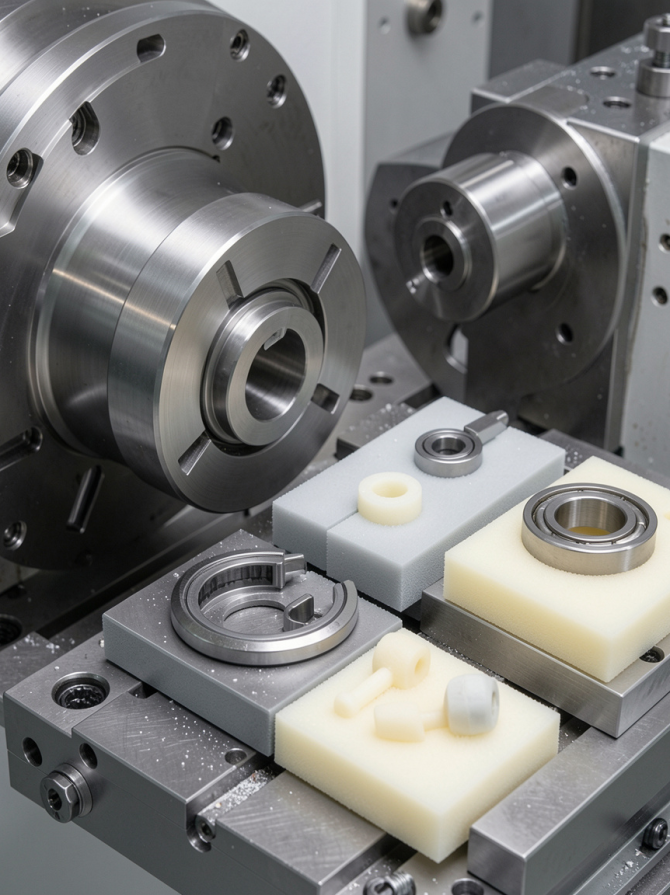
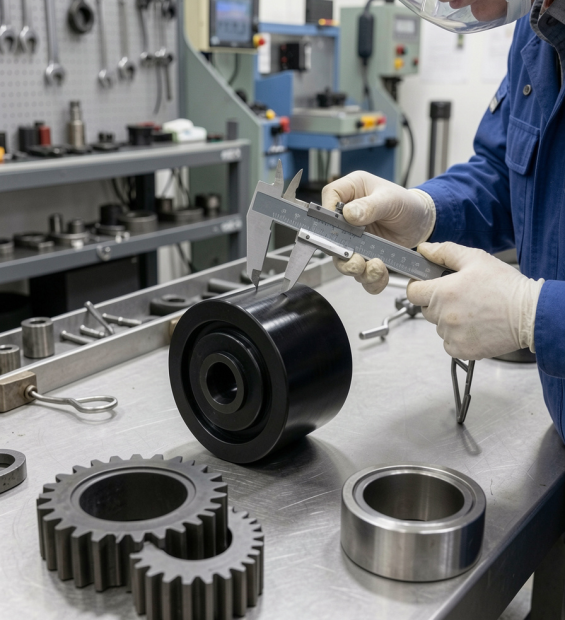
Polyamide 66 (PA66 / Nylon 66) is well-suited for machining into high-strength, wear-resistant components that need stiffness, dimensional stability, and reliable mechanical performance under load.

Our PA66 machining capability includes:

We optimize machining parameters to achieve clean finishes, accurate dimensions, strong mechanical performance, and reliable component life for PA66 parts used in demanding industrial machinery and equipment.

AVAILABLE GRADES

PA66 Grades Supported

We support a range of Polyamide 66 (PA66 / Nylon 66) material grades, including:

Icon
Natural PA66
Black PA66
Extruded PA66
Glass-filled PA66
Heat-stabilized PA66
Oil-filled PA66
Industrial-grade PA66
Custom PA66 grades based on application requirements
Our team assists with PA66 grade selection based on load requirements, wear resistance, heat exposure, stiffness, dimensional stability, machining needs, and operating conditions.

Tolerance information

PA66 Machining Tolerances

Polyamide 66 (PA66 / Nylon 66) machining tolerances depend on:

  • Component geometry
  • Wall thickness
  •  Part size and complexity
  • Moisture absorption considerations
  •  Load and temperature conditions
  •  Application requirements

PA66 is suitable for machined components that require strength, stiffness, wear resistance, and dimensional stability under load. Typical achievable tolerances are maintained as per design feasibility, with tighter tolerances possible for precision parts after engineering evaluation.

Detailed tolerance information can be provided during the RFQ stage.